



.
martes, julio 28, 2026 🌊
spot_img
spot_img

Wire Desks Lock Size First Inside An AI Photo Editor

A local news desk running on wire copy does not get to treat a photo edit as a creative decision. The wire caption sets a character count, the CMS template sets a fixed image slot, and an editor covering a fast-moving story has minutes, not a design review, to get the photo into that slot correctly. The first time a batch of wire photos went through an AI Photo Editor on a live desk shift, the lesson was not about image quality at all; it was about locking two settings before touching anything else.

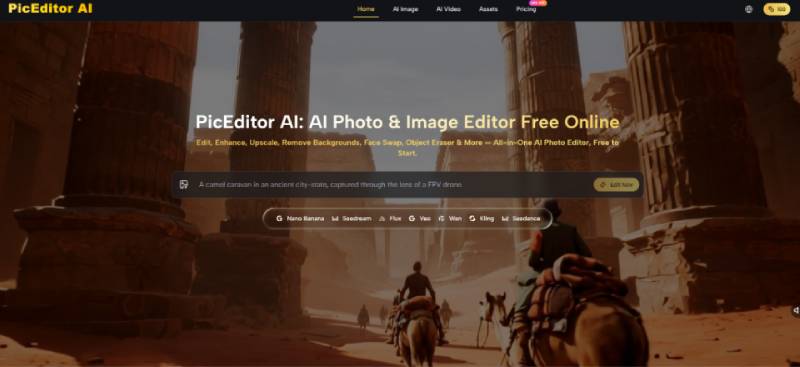
PicEditor AI exposes Image Size as a set of fixed ratios plus an Auto option, and Number of Images as a simple 1 to 4 choice before Generate Image. Neither control sounds important next to a quick tool like Remove Background or Upscale Image, but under real deadline pressure they turned out to matter more than any single edit made to the photo itself.
AI Photo Editor

Wire Deadlines Leave No Room For Layout Guesswork

Cognitive load on a wire desk is not abstract. An editor is reading the incoming caption, checking the CMS character counter next to the image slot, watching for the next wire update, and deciding whether this photo even matches the story, all inside the same few minutes. Adding an open-ended editing decision into that stack, like picking an aspect ratio after the fact, is exactly the kind of extra choice that produces a wrong crop under pressure.

The CMS character counter sitting beside the image slot is the actual constraint that matters, more than any style preference. If the wire caption reads long, the template usually reserves a narrower image column; if it reads short, the photo gets a wider slot. An editor who edits the photo before checking that counter is editing blind.


Prepare The Image Slot Before Opening Any Tool

Before any photo touches Remove Background, Enhance Photo, or any other PicEditor AI quick tool, the CMS slot and the wire caption need a fast look. That look takes seconds, but skipping it is where most wrong-crop mistakes on a wire desk actually start.

The CMS Character Counter Sets The Real Target

The counter beside the image slot is not decoration; it is telling the editor how much room the layout has left after the caption text. A long caption on a breaking story usually means a narrower portrait slot; a short caption on a feature usually means a wide banner slot. Reading that counter before opening the photo editor turns an open-ended edit into a fixed target with one correct answer.

This is easy to skip because it feels like a step that belongs to the CMS, not the photo tool. On a quiet shift there is time to notice the mismatch later and fix it. On a wire-driven hour, later usually means after the page has already published, which turns a five-second glance into a page correction instead.


Follow The Same Four Steps For Every Photo

Once the target slot is clear, the workflow through an AI Photo Edit session on a wire desk stays the same for every photo, which is the entire point under deadline pressure. Repeating a fixed sequence is what keeps a tired editor from improvising a new process on the fifth photo of the shift.
AI Photo Editor

Locking Image Size Before Any Edit Request

Upload the wire photo, then set Image Size to match the CMS slot before describing any edit or picking a quick tool. Image Size offers a set of fixed ratios plus an Auto option, and locking a fixed ratio here, rather than trusting Auto, is what keeps the output matching the layout instead of matching whatever the source photo’s original framing happened to be.

Auto is a reasonable default when there is no fixed slot to hit, which is true for plenty of general photo editing. A wire desk is the opposite case: the slot is fixed before the photo ever arrives, so Auto is guessing at a ratio the CMS template has already decided. Locking the ratio manually removes that guess entirely.

Number Of Images Sets How Many Options Land

Number of Images, a 1 to 4 choice sitting right next to Image Size, decides how many candidates land in My Images per run. On a slow feature story, 3 or 4 gives room to pick the cleanest crop. On a breaking story with the wire clock running, dropping it to 1 or 2 saves the review step entirely, because there is no time to compare four nearly identical crops against a caption that might update again in five minutes.

The table below is the lookup an editor actually uses mid-shift, matched against whatever the CMS slot and wire urgency happen to be that hour.

Story typeImage Size lockNumber of ImagesReason
Breaking wire updatePortrait ratio1Matches narrow slot, no time to compare
Standing feature storyWide banner ratio3Matches homepage slot, room to pick best crop
Social repost cropSquare ratio2Matches social CMS block, quick compare only

Common Mistake Skips The Lock And Costs Time

The mistake worth naming plainly: editing the photo first and checking the CMS slot second. It looks faster in the moment because it skips a step, and it is the single most common way a wrong-ratio photo reaches the page during a wire-driven shift.

One Photo Came Back In The Wrong Ratio

In my testing, one photo went through with Image Size left on Auto instead of locked to the slot ratio, because the wire update had just landed and the habit slipped. The generated image came back wider than the CMS portrait slot could hold, and the layout cropped the subject’s face out of frame once it published to the live template. Placed next to the original wire photo, the crop had shifted enough that a shoulder sat where the subject’s face should have been, which is not a subtle error on a published page.

I caught it on the page preview, not before, which meant the photo had to be sent back to the desk for a fast reprocess while the story was already live to readers. That single miss cost close to fifteen minutes chasing a resend during a shift where every other minute was already spoken for by the next wire update. It is the whole argument for locking Image Size first every time, not just when there happens to be time to double check.
AI Photo Editor

Leave The Desk When The Slot Matches The Wire

The real result check on a wire desk is not a design judgment; it is a match check. Open My Images, place the generated photo next to the CMS slot, and confirm the ratio and crop line up with what the caption actually needs. If it matches, publish and move to the next wire item. If it does not, the fix is almost always the same missed step: Image Size was never locked before the edit.

PicEditor AI did not remove the deadline pressure from a wire shift, and it was never going to. What changed was where the decision happened: locking Image Size and Number of Images before any edit turned a photo decision made under cognitive load into a decision made once, at the start, when the CMS counter and the wire caption were both still visible on screen.

epy.com
epy.com
Redactores de elperiodicodeyecla.com escriben con este nombre de autor para otra serie de artículos.

A local news desk running on wire copy does not get to treat a photo edit as a creative decision. The wire caption sets a character count, the CMS template sets a fixed image slot, and an editor covering a fast-moving story has minutes, not a design review, to get the photo into that slot correctly. The first time a batch of wire photos went through an AI Photo Editor on a live desk shift, the lesson was not about image quality at all; it was about locking two settings before touching anything else.

PicEditor AI exposes Image Size as a set of fixed ratios plus an Auto option, and Number of Images as a simple 1 to 4 choice before Generate Image. Neither control sounds important next to a quick tool like Remove Background or Upscale Image, but under real deadline pressure they turned out to matter more than any single edit made to the photo itself.

AI Photo Editor

Wire Deadlines Leave No Room For Layout Guesswork

Cognitive load on a wire desk is not abstract. An editor is reading the incoming caption, checking the CMS character counter next to the image slot, watching for the next wire update, and deciding whether this photo even matches the story, all inside the same few minutes. Adding an open-ended editing decision into that stack, like picking an aspect ratio after the fact, is exactly the kind of extra choice that produces a wrong crop under pressure.

The CMS character counter sitting beside the image slot is the actual constraint that matters, more than any style preference. If the wire caption reads long, the template usually reserves a narrower image column; if it reads short, the photo gets a wider slot. An editor who edits the photo before checking that counter is editing blind.


Prepare The Image Slot Before Opening Any Tool

Before any photo touches Remove Background, Enhance Photo, or any other PicEditor AI quick tool, the CMS slot and the wire caption need a fast look. That look takes seconds, but skipping it is where most wrong-crop mistakes on a wire desk actually start.

The CMS Character Counter Sets The Real Target

The counter beside the image slot is not decoration; it is telling the editor how much room the layout has left after the caption text. A long caption on a breaking story usually means a narrower portrait slot; a short caption on a feature usually means a wide banner slot. Reading that counter before opening the photo editor turns an open-ended edit into a fixed target with one correct answer.

This is easy to skip because it feels like a step that belongs to the CMS, not the photo tool. On a quiet shift there is time to notice the mismatch later and fix it. On a wire-driven hour, later usually means after the page has already published, which turns a five-second glance into a page correction instead.


Follow The Same Four Steps For Every Photo

Once the target slot is clear, the workflow through an AI Photo Edit session on a wire desk stays the same for every photo, which is the entire point under deadline pressure. Repeating a fixed sequence is what keeps a tired editor from improvising a new process on the fifth photo of the shift.

AI Photo Editor

Locking Image Size Before Any Edit Request

Upload the wire photo, then set Image Size to match the CMS slot before describing any edit or picking a quick tool. Image Size offers a set of fixed ratios plus an Auto option, and locking a fixed ratio here, rather than trusting Auto, is what keeps the output matching the layout instead of matching whatever the source photo’s original framing happened to be.

Auto is a reasonable default when there is no fixed slot to hit, which is true for plenty of general photo editing. A wire desk is the opposite case: the slot is fixed before the photo ever arrives, so Auto is guessing at a ratio the CMS template has already decided. Locking the ratio manually removes that guess entirely.

Number Of Images Sets How Many Options Land

Number of Images, a 1 to 4 choice sitting right next to Image Size, decides how many candidates land in My Images per run. On a slow feature story, 3 or 4 gives room to pick the cleanest crop. On a breaking story with the wire clock running, dropping it to 1 or 2 saves the review step entirely, because there is no time to compare four nearly identical crops against a caption that might update again in five minutes.

The table below is the lookup an editor actually uses mid-shift, matched against whatever the CMS slot and wire urgency happen to be that hour.

Story typeImage Size lockNumber of ImagesReason
Breaking wire updatePortrait ratio1Matches narrow slot, no time to compare
Standing feature storyWide banner ratio3Matches homepage slot, room to pick best crop
Social repost cropSquare ratio2Matches social CMS block, quick compare only

Common Mistake Skips The Lock And Costs Time

The mistake worth naming plainly: editing the photo first and checking the CMS slot second. It looks faster in the moment because it skips a step, and it is the single most common way a wrong-ratio photo reaches the page during a wire-driven shift.

One Photo Came Back In The Wrong Ratio

In my testing, one photo went through with Image Size left on Auto instead of locked to the slot ratio, because the wire update had just landed and the habit slipped. The generated image came back wider than the CMS portrait slot could hold, and the layout cropped the subject’s face out of frame once it published to the live template. Placed next to the original wire photo, the crop had shifted enough that a shoulder sat where the subject’s face should have been, which is not a subtle error on a published page.

I caught it on the page preview, not before, which meant the photo had to be sent back to the desk for a fast reprocess while the story was already live to readers. That single miss cost close to fifteen minutes chasing a resend during a shift where every other minute was already spoken for by the next wire update. It is the whole argument for locking Image Size first every time, not just when there happens to be time to double check.

AI Photo Editor

Leave The Desk When The Slot Matches The Wire

The real result check on a wire desk is not a design judgment; it is a match check. Open My Images, place the generated photo next to the CMS slot, and confirm the ratio and crop line up with what the caption actually needs. If it matches, publish and move to the next wire item. If it does not, the fix is almost always the same missed step: Image Size was never locked before the edit.

PicEditor AI did not remove the deadline pressure from a wire shift, and it was never going to. What changed was where the decision happened: locking Image Size and Number of Images before any edit turned a photo decision made under cognitive load into a decision made once, at the start, when the CMS counter and the wire caption were both still visible on screen.

epy.com
epy.com
Redactores de elperiodicodeyecla.com escriben con este nombre de autor para otra serie de artículos.
uscríbete EPY

¿Quieres añadir un nuevo comentario?

Hazte EPY Premium, es gratuito.

Hazte Premium

epy.com
epy.com
Redactores de elperiodicodeyecla.com escriben con este nombre de autor para otra serie de artículos.
- Publicidad -spot_imgspot_imgspot_imgspot_img
- Publicidad -spot_img

Servicios

Demanda empleo Oferta empleo
Compra Venta
Canal inmobiliario Farmacia
Teléfono interes Autobuses