





Hinge likes to call itself the app designed to be deleted. What it doesn’t put on the billboard is that your odds of deleting it depend less on your personality than on six rectangles of pixels, and that the app has spent years studying exactly which rectangles work.
Most users have never read any of that research. You can tell, because they’re still opening with a group photo from a wedding.
There’s a Nobel Prize inside your dating app
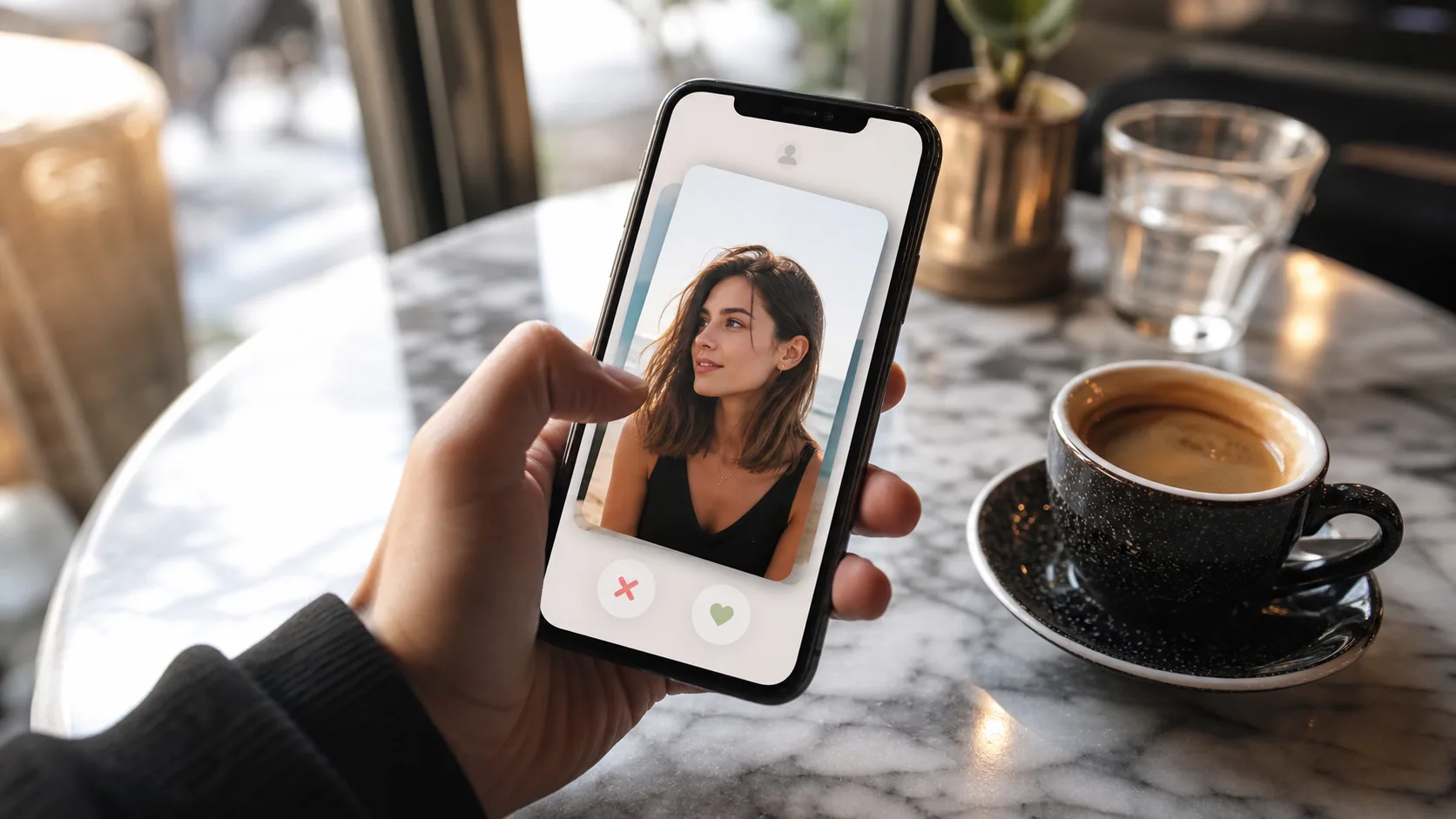
Start with the part that sounds made up. Hinge’s Most Compatible feature runs on the Gale-Shapley algorithm, a piece of matchmaking math that won its creators a Nobel Prize in economics. TechCrunch covered the rollout back in 2018, and the company has leaned on it ever since: the system studies who you like, who likes you back, and tries to pair people into stable matches where neither side would rather be with someone else.
That’s an elegant machine. But it runs on crude fuel. The algorithm can only learn from what people do on your profile, and what people do on your profile is decided in the first half-second by your lead photo. Before the Nobel math gets involved, a stranger’s thumb has already voted. Weak photos mean fewer votes, fewer votes mean worse data, and worse data means the clever algorithm confidently shows you to the wrong people.
So the lead photo works as the system’s fuel line, not its decoration.
Hinge told everyone what works, and nobody listened
Here’s what separates Hinge from the guessing game on other apps: the company actually published photo research. Its data team analyzed member photos and found that candid, in-the-moment shots were 15 percent more likely to earn a like than posed ones. The famous outlier in that study: black and white photos pulled roughly double the likes of their color equivalents, and almost nobody used them.
The findings have circulated for years in dating advice columns, from Elite Daily to a hundred photo-tip blogs. And still, open the app today and you’ll find the same lineup: bathroom mirror, sunglasses on a mountain, one blurry concert, the fish.
Writers who track their own results make the cost visible. One dating data blogger on Substack, who was once featured in Hinge’s own «Most Eligible» list, documented an outbound match rate of 6 percent, and concluded the photos were doing the failing. Ninety-four out of a hundred likes going nowhere is not a personality problem. It’s a portfolio problem.
The six-photo essay nobody has material for
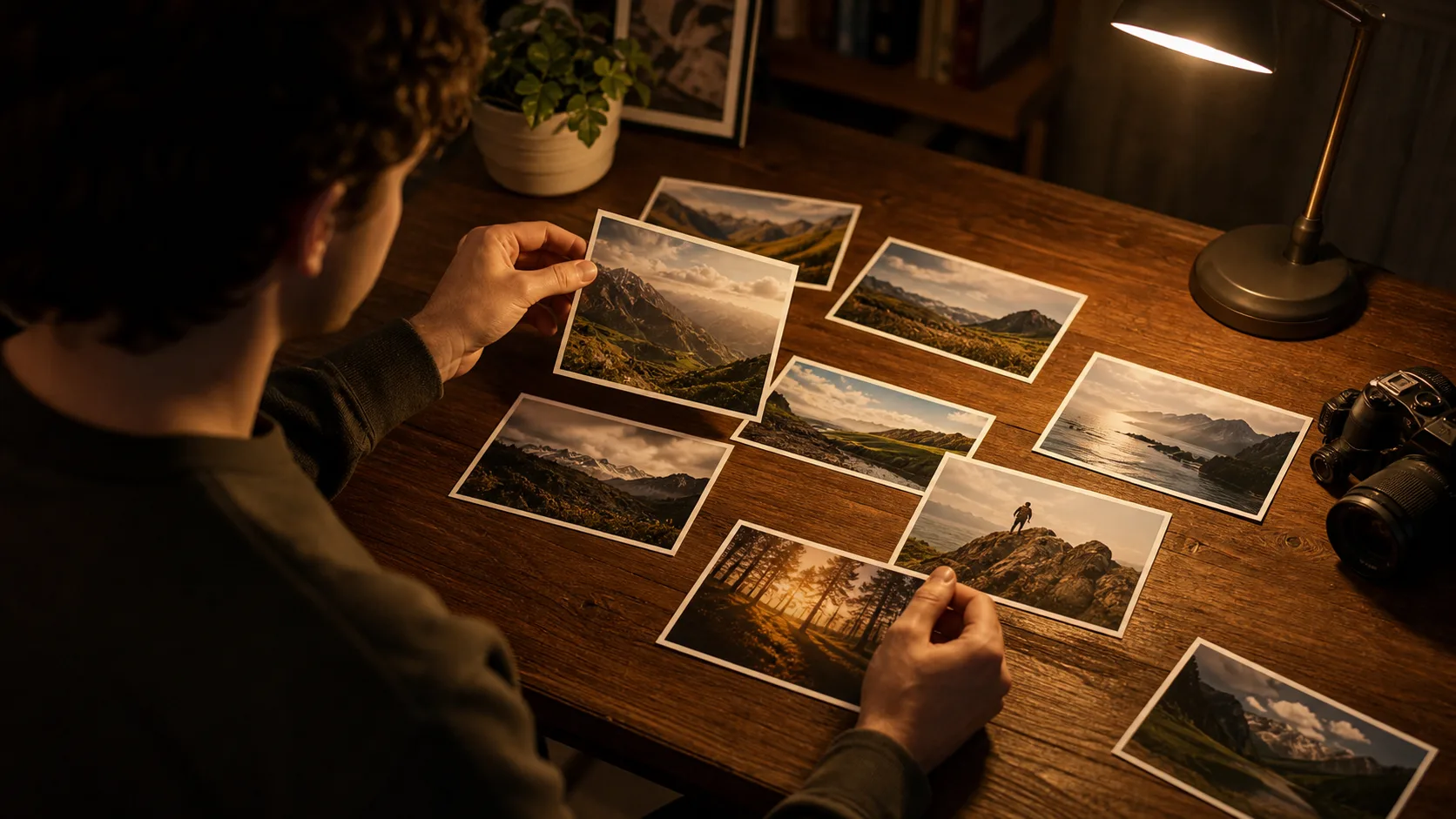
Hinge asks for six photos, and profile coaches broadly agree on what those six should be: a clear face shot, a full-body shot, something social, something active, a hobby, a candid. Read that list again and notice what it actually is. It’s a photo essay about your life, shot across multiple locations, in good light, by someone else.
Almost nobody has that essay sitting in their camera roll. What people have is selfies from one angle, screenshots, and a folder of other people’s dogs. The gap between what the profile format demands and what a normal camera roll contains is the quiet reason so many profiles look thin, repetitive, or ten years old.
People with photographer friends solve this the traditional way. Everyone else either settles or pays a professional $300 to $500 for a lifestyle shoot, waits a couple of weeks, and gets back a few dozen frames from one or two locations. Good frames, but it’s still one afternoon of your life pretending to be six chapters.
The shortcut that showed up in 2026
This is the gap AI photo services moved into. DatePhotos.AI, an AI dating photo generator, built a dedicated pipeline for exactly this app: users upload a stack of ordinary selfies and get back 80 to 180 hinge ai photos spread across 40-plus scenes, from coffee shops and kitchens to hiking trails, in about 20 to 30 minutes for a one-time $29 to $79. The pitch is coverage rather than glamour: enough varied, believable scenes to actually fill the six-photo essay, with each image scored 0 to 100 on how real it looks so users can skip anything that reads as synthetic.
That scoring detail matters more on Hinge than anywhere else, and the reason is structural. Hinge profiles get inspected, not swiped past. Prompts invite people to slow down and read, which means they also slow down and look. A too-smooth render that would survive a half-second Tinder glance gets caught during a ten-second Hinge read. The users doing this well treat AI output the way editors treat a contact sheet: generate plenty, publish only what passes as a Tuesday.
Photos that argue with your prompts will lose
The other Hinge-specific trap is contradiction. On Hinge, your photos and prompts appear interleaved, so they get read together like a single document. A profile that answers «My simple pleasures» with cooking, next to six photos taken exclusively in bars, tells two different stories. Readers notice the mismatch faster than they notice either story alone.
The strong profiles work like a matched set. The prompt mentions Sunday hikes; there’s a trail photo. The prompt jokes about a pasta obsession; there’s a kitchen shot. Every photo backs up a claim the text is making, which makes the whole profile feel verified rather than assembled. Coaches call this prompt support. It’s also just basic storytelling: show the thing you tell.
This is where the coverage problem bites hardest. You can’t match photos to prompts if you only have four photos, all from the same bathroom. Variety, in this format, is less about vanity and more about having raw material for a coherent profile.
What the data says to actually do
Strip out the industry noise and the practical advice from Hinge’s own research plus the coaching consensus fits in a short list. Lead with a clear, smiling, unobstructed face photo, no sunglasses, no group. Include one full-body shot early, because hiding it reads as hiding. Use at least one genuine candid, the category Hinge’s numbers favor by 15 percent. Try one black and white photo, the strange statistical gift almost nobody claims. Cut anything older than two years, because the app is a promise about who shows up. And make every photo defend something your prompts say.
None of this requires believing photos matter more than character. It requires noticing that on Hinge, photos are how character gets communicated before a single word is read.
The app designed to be deleted is really a photo contest with prompts
The uncomfortable summary of a decade of Hinge data is this: the app built a Nobel-grade matching engine, published research on exactly which images feed it best, and most of its users still submit the same four photos they’d have used in 2016. The people winning on Hinge in 2026 aren’t better looking. They’re better documented, whether that documentation came from a photographer, a patient friend, or an AI batch generated over a lunch break.
The algorithm is ready to work for you. It’s just waiting for something better than the fish.










.